







Types of Dentures
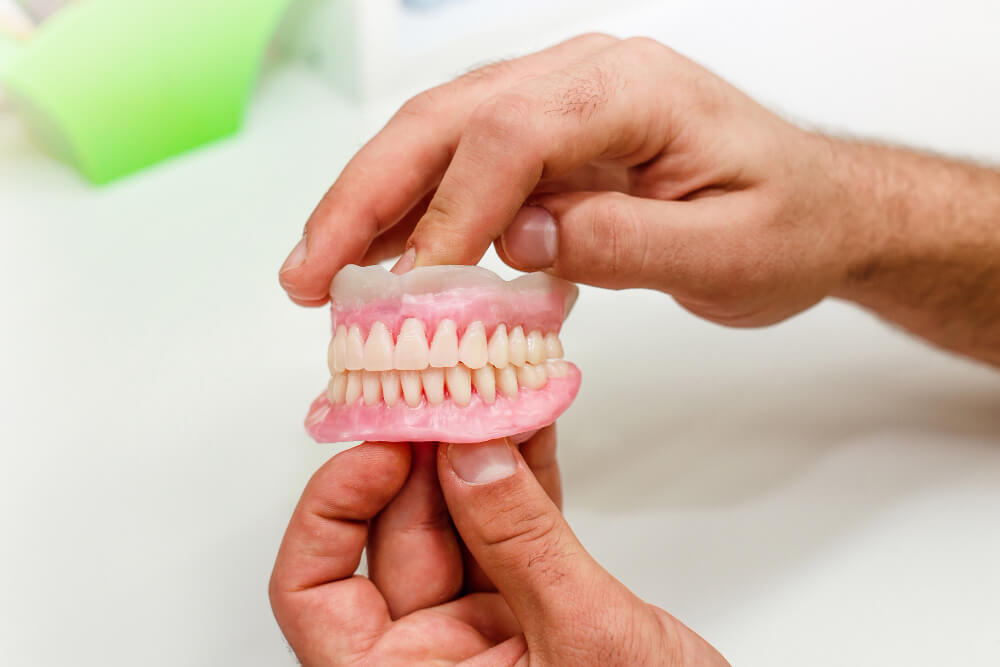
When considering dentures, patients can choose between full and partial dentures. In fact, over the past few years, dentists created hybrids with other dental treatments to provide patients with even more options. Here is a shortlist of denture options one can consider:
The option a patient chooses will depend on that patient’s unique situation and health. Our team is available to discuss all the options. We will help you determine the right one for you.
FREQUENTLY ASKED QUESTIONS
1Will dentures change my appearance?
When patients lose their teeth, the bone loss may begin to cause the cheek to look hollow and sunken. Dentures can help to fill out space and retain the face’s original shape. Having a full set of teeth that look beautiful and healthy also improves a person’s appearance and overall confidence.
2Is it difficult to eat with dentures?
Eating with dentures may feel uncomfortable for a few weeks, just as when people get braces for the first time. However, over time, it becomes easier. In the beginning, try to stay away from foods that meet any of the following criteria:
- Sharp-edged
- Tough
- Sticky
- Hot
3Are there any risks associated with dentures?
study published by the National Institute of Health found that seniors who wore dentures while they slept long-term faced a higher risk of developing pneumonia. The CDC also believes dentures may negatively affect nutrition. They attribute this to denture wearers avoiding fruits and vegetables because they are more difficult to chew.
4Are Adhesives Necessary?
Patients who have lost all their natural teeth may require adhesives, while others may not. Even so, patients with only partial tooth loss may choose to use adhesives for additional support. It may also assist people suffering from neurological disabilities, dry mouth, or who take certain medications.
5How Can I Pay for Dentures?
Dental insurance may cover the cost of dentures. However, there may be a waiting period due to a pre-existing condition. Some patients rely on dental savings plans. Your insurance provider can discuss with you the details.